
Skip to content
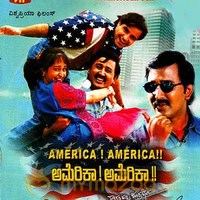
A America America 1996
Kannada Cinema · Movie Hub

America America

4.0/5
“A solid theatrical experience”
Watch Trailer
Link Copied!
Starring
Venu Arvind, Sasi
Music
Mano Murthy
Audio Label
Lahari Music
Year
1996

Audio Songs

All songs →
01
Nooru Janmaku Rajesh, Sangeetha
04:15
02
America America Rajesh, Sangeetha
05:19
03
Haegide Nam Desha Manjula Gururaj, Rajesh, Ramesh Chandra
04:21
04
Banalli Odo Mega Rajesh, Ramesh Chandra, Sangeetha
04:57
05
Yaava Mohana Murali Raju Ananthaswami, Sangeetha
04:47

Related News

More news →
01

Latin America attractive market for Indian export: Minister

Indian exporters should focus on the emerging economies, especially Latin American countries, to sustain growth as demand in rich countries slackens, Minister of State for Commerce and Industry Jyotiraditya Scindia has said. “We need to augment our exports to Latin American countries as they are vibrant economies and offer big opportunities,” Scindia said at an event organised by the Federation of Indian Export Organisations (FIEO) here Tuesday. Scindia said his ministry would announce a report on “reduction of transaction cost” after consultation with all concerned ministries. “Government will chalk out a strategy to facilitate exports and investment after in-depth study which will be commissioned shortly,” the minister said. Advising Indian exporters to focus on developing countries, Scindia said advanced nations would show an import growth of 0.9 to 1 percent while developing economies would exhibit import growth between 4.5 to 5 percent. FIEO President A. Sakthivel said new and untapped markets were helping maintain export momentum despite moderate growth in traditional markets. “The market diversification strategy has started yielding result and will help us to expand our export base.”

02

America to mark 14th anniversary of September 11, 2001 attacks

From New York City to Shanksville, Pa., from the White House to baseball stadiums around the nation, America will pause once again Friday to mark the 13th anniversary of the Sept. 11, 2001 terror attacks that killed nearly 3,000 people. The largest ceremony will take place at the National September 11 Memorial & Museum near the site of the World Trade Center's twin towers, which were brought down when two hijacked passenger jets slammed into them that day. Families of the victims will gather at the memorial's plaza for what has become a tradition of tolling bells, observing moments of silence, and reading the names of those who died. The plaza is reserved for victims' relatives and invited guests for the morning ceremony, but will be open for the public to pay their respects in the afternoon. An estimated 20,000 people flocked to the site last year, the first year the public was able to visit on the anniversary. "When we did open it up, it was just like life coming in," National Sept. 11 Memorial and Museum President Joe Daniels told the Associated Press this week, adding "the general public that wants to come and pay their respects on this most sacred ground should be let in as soon as possible." The Flight 93 National Memorial near Shanksville in western Pennsylvania is marking the completion of its visitor center, which opened to the public Thursday. At the Pentagon, Secretary of Defense Ash Carter and other officials will join in remembrances for victims' relatives and Pentagon employees. President Obama is scheduled to observe a moment of silence with the first lady and White House staff on the mansion's South Lawn before visiting Fort Meade in Maryland, in recognition of the military's work to protect the country. Ohio's statehouse will display nearly 3,000 flags — representing the lives lost — in an arrangement designed to represent the World Trade Center towers, with a Pentagon-shaped space and an open strip representing the field near Shanksville. Sacramento, Calif., will commemorate 9/11 in conjunction with a parade honoring three Sacramento-area friends who tackled a heavily armed gunman on a Paris-bound high-speed train last month. Major League Baseball will pay its own tribute to mark the anniversary of the attacks. At every stadium where a big league game is played Friday, there will be moments of silence, as well as other remembrances. Players, managers, coaches and umpires will wear caps with flag patches In Washington, some members of Congress plan to spend part of the anniversary discussing federal funding for the ground zero memorial. The House Natural Resources Committee has scheduled a hearing Friday on a proposal to provide up to $25 million a year for the plaza. The memorial and underground museum together cost $60 million a year to run. The federal government contributed heavily to building the institution; leaders have tried unsuccessfully for years to get Washington to chip in for annual costs, as well. Under the current proposal, any federal money would go only toward the memorial plaza. An estimated 21 million people have visited it for free since its 2011 opening. The museum charges up to $24 per ticket, a price that initially sparked some controversy. Still, almost 3.6 million visitors have come since the museum's May 2014 opening, topping projections by about 5 percent, Daniels said. Any federal funding could lead to expanded discounts for school and other groups, but there are no plans to lower the regular ticket price, he said. This year's anniversary also comes as advocates for 9/11 responders and survivors are pushing Congress to extend two federal programs that promised billions of dollars in compensation and medical care. Both programs are set to expire next year. But some of those close to the events aim to keep policy and politics at arm's length on Sept. 11. Organizers of the ground zero ceremony decided in 2012 to stop letting elected officials read names, though politicians still can attend. Over the years, some victims' relatives have invoked political matters while reading names — such as declaring that Sept. 11 should be a national holiday — but others have sought to keep the focus personal. "This day should be a day for reflection and remembrance. Only," Faith Tieri, who lost her brother, Sal Tieri Jr., said during last year's commemoration.

03

Corporate America's Detroit love affair

Last April, Shell flew me to Detroit for the company’s annual Powering Progress Together conference. This edition of the event was held in the cavernous Cobo Center, Detroit’s newly renovated downtown convention hall, and the conversation was all technocratic optimism. The Houston-based oil company had convened executives, NGO leaders, techies, academics and Detroit pols to discuss the “urban nexus” – a vision of the future of cities. Mike Duggan, the mayor of Detroit, was hip to the lingo. “The future belongs to the thinkers, doers and innovators,” he told the audience. When the president of Shell, Marvin Odum, talked about Detroit and mobility, I presumed he was referring to the Motor City moniker and the auto industry. But Detroit is also the largest American city with no rail transit. Its bus system is among the worst in the nation. The most prominent kind of mobility in Detroit is the unprecedented, continued exodus of the citizenry: around 238,000 people left between 2000 and 2010; 34,000 since. Even as the outflow ebbs, no other large American city is losing people faster. So why would a multinational corporation hold a conference on mobility and technology in Detroit which, in addition to all its other problems, was then five months out of the largest municipal bankruptcy in US history? The answer, in part, is that Detroit’s comeback story has resonated with corporate benefactors, for whom investment and involvement in the city is its own public relations campaign. “The events industry today is shifting in perspective so that the destination is really part of the event, not just the room that it’s in,” says Thom Connors, the general manager of the Cobo Center since 2010. “We pitched it from the beginning as a comeback.” For several years, the resurgence of Detroit’s core has given a positive association to consumer products. The “to hell and back” narrative that debuted in Chrysler’s 2011 Super Bowl commercial brought viewers to tears. (Tagline: “Imported from Detroit.”) Shinola, which manufactures its elegant watches and bicycles in the city, has shrewdly traded on its Detroit roots. The city’s resilience has also been harnessed to sell energy drinks and vodka. Corporate goodwill in Detroit, like manufacturing, has taken on an aspect of performance. In March last year, Citi Corp released an advertisement trumpeting its own efforts to underwrite the bonds to bring Detroit’s flagging streetlight system back online. The video is inspirational, in a Wall Street kind of way. “You can have the greatest dreams in the world,” an official says. “But unless you can finance those dreams, it doesn’t happen.” In May, JP Morgan Chase committed $100m (£69m) to invest in Detroit – a “double bottom line” project expected to produce both profits and social good. The bank has celebrated the investment in a series of print media advertisements. In 2010, Blackstone-owned Vanguard Health Systems bought the non-profit Detroit Medical Center, committing to invest $850m over five years in the hospital system. The Private Equity Growth Capital Council produced a video about the purchase to demonstrate the industry’s virtue and utility. Public relations ploy, clever investment opportunity, or much-needed assistance? It’s a little of all three. “Everybody wants to be part of it because it’s a good story,” says Mike Bernacchi, a professor of marketing at the University of Detroit-Mercy. “You can hear that talk, ‘Where were you when we needed you?’ There is certainly cynicism.” On the other hand, says John Mogk, a law professor at Wayne State University, the city will take what it can get. “Every little bit helps.” This is, after all, a place that Bruce Katz and Jennifer Bradley – the city-loving Brookings Institute scholars – called “a dystopian disaster” in 2009. “Detroit,” they wrote, “has become shorthand for failure.” It seems corporate America doesn’t see it that way anymore. The $279m renovation of Cobo, the downtown convention centre, will bring in 15 major conventions and conferences this year, up from four in 2011. Some of those groups choose Detroit for its international airport and cheap hotel rooms, but many see the city as a symbolic site, whether for its automotive identity, status as a border city, or ongoing downtown revival. The auto show, a cornerstone civic event that had threatened to desert Detroit unless improvements were made to Cobo, made a celebrated return that was taken as a metaphor for the city at large. Capitalism loves a crisis and, in practical terms, downtimes have made Detroit more a company town than ever before. “In Detroit, the absence of federal support like that offered to New Orleans,” writes professor James Rhodes in an essay comparing the two cities, “means that it is private and quasi-private actors that will dominate the city’s restructuring in the wake of bankruptcy.” Failed public services open the door for charitable companies like Penske Automotive, which donated 100 new police cars. Real estate has been so cheap that a couple of local power brokers, Dan Gilbert and the Illitch family, have consolidated control over a vast swath of downtown and the vibrant Woodward Avenue corridor. Shell’s conference was followed by the Eco-marathon, an engineering contest in which students from North and South America compete to build and race high-efficiency vehicles of their own design. A conference centre full of clever kids tinkering with vehicles is an inspiring sight. At the same time, it’s hard to imagine New York or Chicago turning over their downtown streets for a science fair. The city’s biggest transportation project, the M-1 Rail, is being funded mostly by private dollars. The city’s urban planning blueprint, Detroit Future City, is also a non-governmental project. No surprise that media coverage of Detroit often invokes the entrepreneur as a kind of saviour. But is Detroit, as the Detroit Metro Convention and Visitors Bureau put it in 2013, “America’s greatest comeback city”? As many Detroiters have observed, the city is resurgent but also bifurcating: a small and mostly white city is thriving within a much larger, poorer black city. The former is the recipient of big-money largesse and fodder for branding. The latter is, in some ways, no better off than it was before. That’s too long a story to tell in a car commercial. Also missing from the famous Super Bowl spot that started the trend: Chrysler decided to move its headquarters from Highland Park, a desperately poor enclave within Detroit, to suburban Auburn Hills, Michigan, 25 miles north, in 1992.

04

Diwali in America

The times of Tamilians devoid of Diwali celebration in the U.S. has demised now. Bharat Creations and the exhibitors of 'Aegan' in USA are making plans to celebrate the festival in a grand style. Starring Ajith and Nayantara, the movie is about to be released on this occasion. Ayngaran International made efforts to host a celebration during the consequent days of the festival for the people in USA. A fete is being organized to be held on Sunday and Monday in the premises of the theatres where Aegan is to be released. The local exhibitors are planning to distribute sweets and screen the movie as a Diwali gift for the audiences. Exclusive prizes are planned along to be given out to the visitors. All in all, it's going to be a grand time for the people there as they get to celebrate the festival and simultaneously watch the movie on the first day of screening itself.

05

Four Indians among ‘America’s Coolest Young Entrepreneurs’

Four Indian Americans figure in Inc. magazine’s list of “30 Under 30: America’s Coolest Young Entrepreneurs” who are “building unique brands, making money along the way and changing the way we do business”. Some, like Naveen Sevadurai, 28, who co-founded Foursquare, run one of the hottest tech startups in the world, while others run companies just now getting noticed, says the monthly US business magazine. Three other Indian Americans in the list are Vikas Reddy, 26, who co-founded technology start-up ‘Occipital’, Sachin Agarwal, 30, of San Francisco-based start up ‘Posterous’ and 22-year old Stanford graduate Ooshma Garg, who found job finding site ‘Anapata’. “For them, building a business is not a lone pursuit, but rather an extension of their social lives,” says Inc. “In fact, if there’s one thing that stands out about this year’s coolest young entrepreneurs, it’s that their generational fascination with all things social extends deeply into their entrepreneurial zeitgeist,” it says. “Simply put, they are growing their companies by building communities,” the magazine says of the 49 on the list. Selvadurai’s company which has raised $20 million in venture capital recently “has already found two primary revenue streams: big brands such as Starbucks and The New York Times sponsor content, while local businesses use the app to offer deals to lure in nearby users.” Posterous co-founded by Agarwal with Garry Tan takes all the fuss out of posting content online. “Their concept for Posterous is decidedly simple: E-mail, its founders believe, is the gateway for sharing information-text, photos, and videos-online.” Reddy and Jeffrey Powers co-founded Occipital, a technology start-up that has developed RedLaser, a best-selling iPhone app that lets users scan barcodes. Since debuting in May 2009, RedLaser has been downloaded more than two million times, making it one of the most popular paid-iPhone apps in the market. The company recently sold RedLaser to eBay and used the proceeds from the deal to hire three engineers who are now working on “developing more cool products”. Garg named her Palo Alto start-up Anapata after a Swahili word that means “find, attain, and achieve.” Garg charges law firms an annual subscription fee of between $2,500 and $20,000 for access to her database of job seekers, which she collects by partnering with student organizations such as the Latino Pre-Law Society and the Black Law Students Association.

06

Sardaar Audio Live in America; No fee

Power Star Pawan Kalyan's Sardar Gabbar Singh is the most trending topic in two Telugu states from past few days. Film which is progressing at brisk pace in the direction of Bobby is celebrated its audio launch at Novatel, Hyderabad. Several news channels aired the programme by blocking important slots. But what shocking is the audio event was telecasted live at a multiplex in USA.Some crazy fans of Pawan have organized the live telecast of event at the Serra theatres in Milpitas, California. There was no entry fee for the event and fans rushed to the multiplex in huge numbers and cherished with the speeches of Pawan and Chiru. There were loud cheers from the fans at every word spoken by Chiranjeevi. Fans went berserk when he used words like "Kalyan", "Gabaar Singh" and "my brother Kalyan" during his speech.